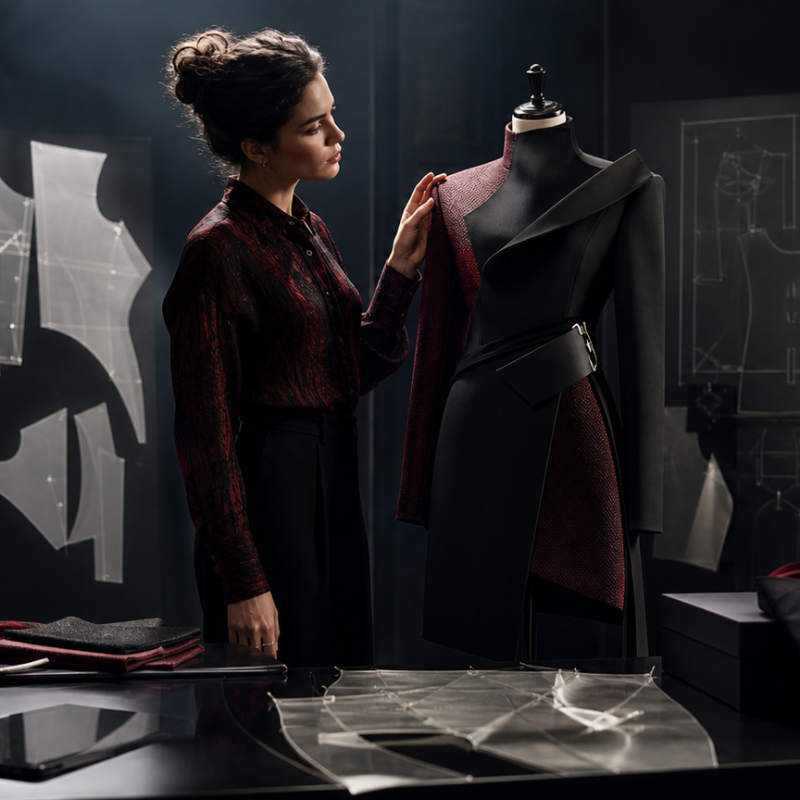
A dining table can be a cutting table at 10 a.m., a photography set at two, and a packing station by dinner. That flexibility is exactly why so many clothing businesses begin at home. It is also how a promising idea ends up taking over the kitchen, the hallway, and every available chair.
If you are researching how to start a small clothing business from home, the goal is not to make your house look like a miniature fashion headquarters. The goal is to build the smallest version of the business that can produce, sell, and deliver one good product reliably.
Home keeps the overhead controlled. It does not remove product development, pricing, legal setup, apparel labeling, customer service, or returns. The unglamorous parts still arrive. They simply arrive in cardboard boxes.
The home-business rule: Start with one customer, one clear product, one primary sales channel, and a workspace you can reset at the end of the day.
For the broader brand-building process, including manufacturing, naming, pricing, and launch planning, read AFTV’s complete guide to starting a clothing brand. This guide concentrates on what changes when the business begins under your own roof.
How to start a small clothing business from home: the short version
- Choose a narrow customer and one hero product.
- Pick a production model that fits your skills, space, and cash.
- Test demand before ordering meaningful inventory.
- Check local zoning, lease or HOA rules, licenses, and insurance.
- Build a lean business plan and a full cost sheet.
- Clear the brand name and separate the business finances.
- Develop, test, label, and document the product.
- Create an online store that answers fit and delivery questions.
- Photograph the product honestly.
- Launch to a small audience, fulfill the orders, and learn from returns.
Simple list. Serious work. The advantage of starting small is that mistakes stay small enough to fix.
1. Decide what kind of clothing business belongs in your home
The first decision is not the logo. It is the operating model.
A founder sewing made-to-order skirts has a different space problem from someone selling printed sweatshirts through a print-on-demand partner. A vintage reseller needs storage and a repeatable photography setup. A cut-and-sew label may outsource production but still receive samples, size sets, packaging, and finished inventory at home.
| Business model | What happens at home | Best reason to choose it | Watch closely |
|---|---|---|---|
| Made to order | Design, cutting, sewing, fittings, and packing | Production follows demand | Capacity and delivery times |
| Print on demand | Design, store management, marketing, and service | Little finished inventory | Blank quality, print quality, and margins |
| Decorated wholesale blanks | Artwork, sample approval, inventory, and packing | Faster product development | Limited control over fit and fabric |
| Small-batch cut and sew | Design, sampling, quality checks, inventory, and fulfillment | More original product | Sampling costs, minimums, and cash tied up in stock |
| Curated resale or vintage | Sourcing, cleaning, measuring, photography, and shipping | Every item can be listed quickly | Storage, condition notes, and one-off inventory |
Choose the model that lets you test the idea honestly. There is no prize for making the first collection technically difficult.
I would rather see a founder launch one properly costed shirt from a spare room than twelve styles built on wishful math. Complexity looks impressive right up until every size, color, trim, and return becomes a separate problem.
2. Find one customer and one product worth testing
“People who like fashion” will not help you decide on an inseam, neckline, price, or size range. A useful customer description has a situation attached to it.
Consider the difference:
- Graphic T-shirts for everyone.
- Heavyweight, locally illustrated T-shirts for independent music fans who buy merchandise at small venues.
The second idea gives you places to find customers, references for quality, a likely price neighborhood, and a reason the product belongs to that community.
Before producing inventory, speak with people who match the customer. Read reviews of competing garments. Look for the same complaint appearing again: sleeves that run short, fabric that turns sheer, confusing sizing, weak pockets, slow delivery, or a price that does not match the finish.
The U.S. Small Business Administration’s market-research guidance recommends examining demand, market size, location, market saturation, and what customers already pay for alternatives. For a home clothing business, that research can begin with a dozen useful conversations and a careful competitor sheet. It does not need a dramatic presentation.
Ask for evidence stronger than compliments. A waitlist signup is useful. A refundable deposit is stronger. A paid preorder with a clear delivery date is stronger still.
3. Validate demand before your home becomes the warehouse
Inventory is cash wearing a garment bag.
Start with the smallest honest test your model allows:
- One finished sample photographed on the intended customer.
- A made-to-order launch with a fixed number of production slots.
- A limited run in the most defensible colors and sizes.
- A print-on-demand test before moving to bulk decoration.
- A preorder with a clear refund policy and realistic delivery window.
Do not disguise a sketch as a finished product or promise a shipping date before confirming production. Validation only helps when the offer resembles what the customer will actually receive.
Track the questions people ask. If every message is about sizing, the product page is not ready. If people love the idea but resist the price, either the value is unclear or the cost structure does not fit the market. If one color gets praise and another gets orders, trust the orders.
4. Build a home workspace around the workflow

A beautiful studio is optional. A repeatable workflow is not.
Map what happens to a garment from arrival to shipment:
Receive → inspect → store → prepare or produce → photograph → pack → hold for carrier pickup → process returns
Give each stage a defined place, even if that place is a labeled shelf or a folding table that comes out twice a week. Keep clean finished garments away from food, pets, smoke, damp areas, open windows, and active cutting or printing work.
A workable home setup
- Shelving or closed bins for fabric and finished inventory.
- A flat surface for measuring, folding, and packing.
- A garment rack for samples and ready-to-photograph pieces.
- A small quality-control area with a measuring tape, lint roller, steamer, and good light.
- A permanent location for labels, mailers, tissue, tape, and return supplies.
- A simple SKU and bin system that another person could understand.
- A neutral wall or paper backdrop near consistent natural or artificial light.
Your spare bedroom does not become a warehouse just because more boxes fit. Set a stock limit before launch. When inventory crosses it, the next decision should be outside storage, a fulfillment partner, or a smaller production run, not sacrificing another room.
Check the rules attached to your address
Home-based businesses can still be affected by local zoning, licenses, lease terms, HOA rules, customer-visit restrictions, signage rules, and carrier traffic. The SBA notes that zoning ordinances may apply even when a business is based at home.
Insurance deserves its own conversation. A standard homeowners or renters policy may not cover business inventory, equipment, customer visits, or product-related claims. The SBA’s business insurance overview includes home-based and product liability coverage among the options owners may need to discuss with a licensed insurance professional.
5. Write the one-page business plan and the full cost sheet
A home business does not need a corporate binder. It does need answers.
Your one-page plan should state:
- The customer and the problem the product solves.
- The first product and why it is different.
- The production model and who is responsible for each step.
- The primary sales channel.
- The launch method.
- The amount of cash at risk.
- The result that would justify a second run.
Then build a cost sheet that is less charming and more useful than the mood board.
Include the garment or blank, decoration, labels, packaging, sampling, freight, duties when relevant, payment fees, platform costs, shipping supplies, expected returns, defects, photography, and marketing. If you perform the labor yourself, record the time. Free founder labor has a habit of becoming an impossible delivery promise.
For a deeper look at positioning, channels, launch campaigns, and measurement, see AFTV’s guide to fashion marketing strategy.
6. Set up the business before taking regular orders
The exact requirements depend on the business structure and location, so this article is not legal or tax advice. A few steps, however, belong on every founder’s checklist.
Clear the name
Search the web, social platforms, domains, state business records, and federal trademarks before ordering labels or packaging. The USPTO provides the official federal trademark search system and guidance on looking for confusingly similar marks. A database search is not the same as a legal clearance opinion, particularly when the name will carry a serious investment.
Choose and register the structure
The SBA compares common business structures and explains how they can affect taxes, paperwork, fundraising, and personal liability. State and local registration, permit, and sales-tax requirements vary.
Separate the money
Open a dedicated business account and use a bookkeeping system from the first transaction. Keep receipts for samples, equipment, inventory, software, shipping, and professional services. It is much easier to understand the margin when grocery purchases are not sitting between fabric invoices.
If the business needs an Employer Identification Number, the IRS issues EINs directly at no charge. The IRS advises forming a legal entity with the state before applying for that entity’s EIN.
7. Treat apparel compliance as product development
A label is not the final decorative touch. It is part of the product.
The Federal Trade Commission’s clothing and textiles guidance covers fiber content, country of origin, the identity of the manufacturer or responsible business, care instructions, and advertising claims such as “Made in USA.” Requirements differ by product and material.
The U.S. Consumer Product Safety Commission explains federal flammability requirements for clothing textiles, with additional rules for categories such as children’s sleepwear. If you sell children’s products, sleepwear, or technically unusual materials, bring compliance into the conversation before approving production.
Keep a product file for every style:
- Supplier and factory information.
- Fiber-content documentation.
- Country-of-origin information.
- Care instructions.
- Test reports or certificates when required.
- Approved measurements and tolerances.
- Label and packaging artwork.
- Sample approvals and quality notes.
A supplier’s casual “yes, compliant” is not a document. Save the records.
8. Develop a product your home business can repeat
The sample has two jobs: convince the customer and teach the business how to make the product again.
Check fit on the intended body, not only on a dress form. Wash or clean the sample according to the care instructions. Measure it before and after. Examine seams, closures, print or embroidery quality, opacity, pilling, color transfer, and how the garment moves after a few hours of wear.
Write down what passes. Memory is not quality control.
If physical sampling is expensive, digital tools can help compare silhouettes, colors, artwork placement, and some aspects of fit before producing every variation. AFTV’s guide to digital fashion and virtual clothing explains where 3D garments fit into product development and campaign work. Digital review can reduce avoidable sample rounds, but a garment meant for a body still needs physical fit and wear testing.
9. Learn how to start a clothing business online without building a maze
When people ask how to start a clothing business online, the website platform tends to get all the attention. The product page deserves more.
Choose an ecommerce system that can handle the actual business: size and color variants, inventory, taxes, shipping rules, discounts, email capture, returns, analytics, and the payment methods your customers expect. Then keep the launch version simple.
Every product page should answer:
- What is the garment made from?
- How does it fit?
- What size is the model wearing, and what are the relevant measurements?
- What are the garment measurements?
- How should it be cleaned?
- Where was it made?
- When will it ship?
- What can be returned or exchanged?
- What does the fabric, construction, or finish look like up close?
Write for the person deciding between two sizes at 11:40 p.m. “An elevated essential for your journey” will not help. A specific note about rise, stretch, weight, or shoulder fit will.
Before opening the store, place an order yourself on mobile. Read every automated email. Create a discount. Cancel an order. Process a return. Check what happens when a size sells out. The first customer should not be the first person to test the system.
10. Photograph what the customer needs to judge
A home shoot can look intentional without pretending to be a major campaign.
Start with consistency: one background, one light setup, one crop system, and a shot list for every product. Capture the front, back, side, fabric texture, construction details, closures, labels, and the garment on a person. Add movement when drape matters.
Keep color editing honest. A beautiful image that misrepresents the fabric creates returns, not loyalty.
A useful home-shoot checklist:
- Steam and lint-roll every piece.
- Photograph a color reference or gray card when accuracy is difficult.
- Keep the camera height and distance consistent.
- Record the model’s measurements and sample size.
- Capture both editorial images and clean product images.
- Export web files at a consistent ratio and sensible size.
- Write descriptive alt text for the garment and view shown.
Your campaign can have atmosphere. Your product page still needs evidence.
11. Launch small and market the making of the product
Do not wait until launch day to introduce the brand. Show the choices that make the product worth noticing: the first fit problem, a fabric comparison, the rejected sample, the pocket depth, the print test, or the reason one color survived.
This is where a home-based label can be more interesting than a polished anonymous storefront. The customer can see the decisions. Just avoid manufacturing theater. A staged pile of sketches does not replace a useful explanation of the garment.
Build the launch around one clear action:
- Join the early-access list.
- Reserve a made-to-order slot.
- Shop the limited drop.
- Attend a local fitting or pop-up.
- Follow the development of the next color or size.
Choose the channels where the customer already pays attention, then give each channel a job. Social content can create discovery. Email can bring interested people back. The product page can close the information gap. Customer service can rescue uncertainty before it becomes a return.
For more practical reporting on brand building and selling fashion, explore AFTV’s Fashion Business coverage.

12. Make fulfillment boring on purpose
The order notification is exciting. The packing system should not be.
Create a written routine:
- Pull the correct SKU and size.
- Inspect the garment in good light.
- Remove lint and loose threads.
- Fold and pack it consistently.
- Check the shipping address and service.
- Record the tracking number.
- Move the order and inventory status together.
- Store proof of shipment.
Set carrier pickup or drop-off days that match the delivery promise. Keep return supplies ready. Define where returned pieces wait for inspection so they do not quietly rejoin sellable inventory.
Track why items come back. “Wrong size” is the beginning of the answer. Was the waist small, the sleeve short, the chart unclear, or the customer between sizes? That detail belongs in the next product page, pattern revision, or buy plan.
When the business has outgrown the house
Moving out is not a vanity milestone. It is an operating decision.
The home setup may have reached its limit when:
- Inventory blocks normal living space or safe exits.
- Carrier pickups or customer visits conflict with local rules.
- The power, ventilation, noise, or equipment needs exceed the room.
- Stock accuracy drops because products are stored in too many places.
- Packing interrupts production, and production interrupts customer service.
- A fulfillment partner costs less than the time and space the current system consumes.
Until then, home can be an advantage. It keeps the founder close to the sample, the order, the customer question, and the return reason. Those are the parts of the business worth seeing clearly.
Frequently asked questions
Can I legally run a clothing business from home?
Often, yes, but the rules depend on the address and the activity. Local zoning, business licenses, lease or HOA terms, customer visits, signage, employees, equipment, and delivery traffic may all matter. Check the city or county rules attached to the property and discuss business coverage with an insurance professional.
Do I need an LLC to sell clothes online?
Not every clothing business must be an LLC. The right structure depends on ownership, taxes, liability, location, and growth plans. The SBA’s business-structure guide is a useful starting point, but an attorney or tax professional can advise on the specific choice.
What is the easiest clothing business to start from home?
Print on demand and decorated wholesale blanks can reduce product-development and inventory demands. Made-to-order production can also limit finished stock when the founder has the skills and enough time. The easiest model is the one whose quality, delivery time, and margins you can control.
How much inventory should I buy for the first launch?
There is no universal number. Use actual demand signals, supplier minimums, available cash, storage limits, size assumptions, and reorder timing. A smaller run that sells and teaches you something is more useful than a low unit price attached to months of unsold stock.
Can I use my home address for an online clothing store?
That depends on local registration rules, the ecommerce platform, carriers, banking requirements, and how much personal information you are comfortable displaying. Review whether a commercial mailbox, registered agent address, or separate return address is permitted and appropriate for the specific use. Do not use an address service in a way that misrepresents the business location.
What should I sell first?
Choose the product that makes the brand’s difference easy to understand and that you can produce consistently. One hero product with strong fit information, good photography, and a believable delivery promise is a better opening than a crowded collection with no obvious center.
Start small enough to see the business clearly
A home is not a lesser place to start a clothing business. It is a very honest one. Every inefficient step is visible. Every box has to go somewhere. Every return comes back through the same door.
Use that closeness. Learn which product earns an order, which detail earns trust, which size note prevents a return, and which part of the process needs to leave the house first.
The first goal is not to look like a large label. It is to make one promise, deliver it well, and build the next decision from what customers actually did.
Photo credits: Featured image by cottonbro studio / Pexels; workspace image by Antoni Shkraba / Pexels; fulfillment image by Kampus Production / Pexels. Used under the Pexels License.