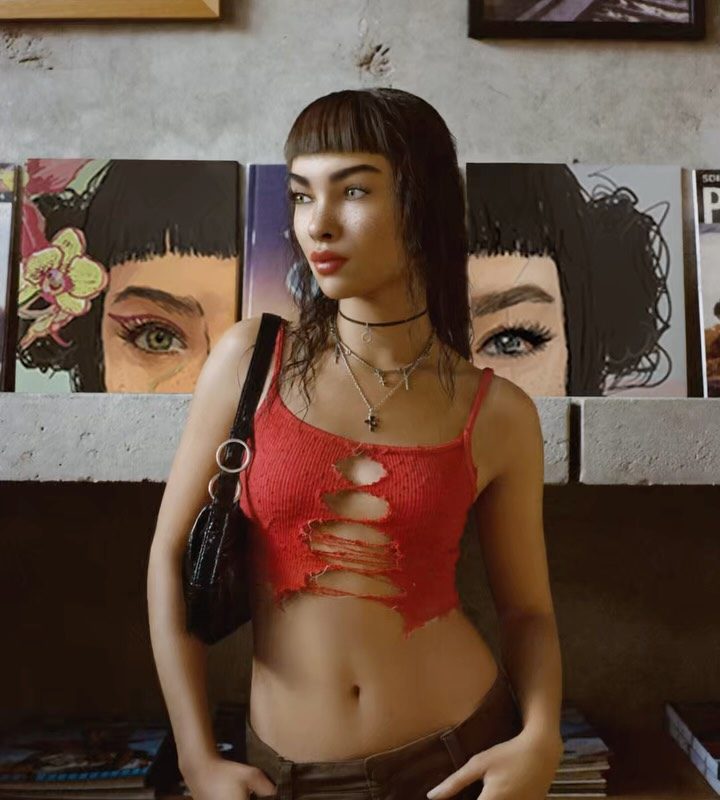
AI can sketch a look in seconds. It cannot tell you whether the sleeve twists on the bias, whether the factory can make it, or whether the customer will return it after one wear.
That gap explains both the excitement and the confusion around AI in fashion industry workflows. The useful systems are not magic designers hiding inside a laptop. They are tools for reading patterns, testing options, finding products, generating first drafts, and moving repetitive work off a human desk. The human still has to know when the answer is wrong.
The artificial intelligence fashion conversation also covers several very different technologies. Predictive models estimate demand. Computer vision reads images. Recommendation systems rank products. Generative AI creates text, images, and variations. Treating all of that as one shiny category makes buying software much easier and evaluating it much harder.
Here is the practical version: where AI is already being used across fashion, which tools are worth understanding, what the risks look like, and what may change next. For more reporting as the field develops, follow AFTV’s AI in Fashion coverage.
AI in the fashion industry: the short version
- Design and product development: generating concepts, colorways, prints, technical starting points, and digital samples.
- Trend and demand forecasting: finding patterns across sales, search behavior, social imagery, weather, and regional demand.
- Merchandising and inventory: planning assortments, allocating stock, timing promotions, and identifying slow sellers.
- Shopping and personalization: conversational search, recommendations, styling, size guidance, and virtual try-on.
- Marketing and ecommerce operations: drafting product copy, adapting campaign assets, analyzing performance, and answering routine questions.
- Risk and governance: checking copyright, privacy, bias, accuracy, disclosure, and who approved the final output.
The common thread is not “AI replaces fashion work.” It is “AI changes where the first draft comes from.” That can save time. It can also produce the wrong answer faster.
What AI in fashion actually means
Fashion already runs on prediction. A buyer decides which coat will sell six months from now. A designer chooses which proportion feels early rather than late. A planner estimates how many units belong in Miami and how many belong in Minneapolis. AI adds more data and more automation to those decisions, but it does not remove uncertainty.
It helps to separate four jobs:
| Type of AI | What it does | Fashion example |
|---|---|---|
| Predictive analytics | Estimates what is likely to happen next | Demand forecasting, markdown risk, or stock allocation |
| Computer vision | Recognizes visual attributes in images | Identifying colors, silhouettes, prints, or similar products |
| Recommendation systems | Ranks options for a person or situation | Product recommendations, outfit suggestions, or search results |
| Generative AI | Creates new text, images, video, or variations | Concept images, product descriptions, campaign drafts, or synthetic models |
Digital fashion overlaps with this field but is not the same thing. A 3D garment can be built without generative AI, and an AI-written product description is not a digital garment. AFTV’s guide to digital fashion and virtual clothing explains that side of the system in more detail.
1. Trend forecasting and demand planning
AI forecasting tools can process far more signals than a team can review manually: historical sales, search behavior, product attributes, regional differences, social images, weather, and competitor activity. The useful output is not “blue will be trending.” It is a more specific decision: which blue, for which category, in which market, at what time, and with how much confidence.
Platforms such as Heuritech use computer vision to identify fashion attributes in social imagery, while retail-intelligence platforms such as EDITED analyze market, assortment, and pricing data. Those descriptions come from the vendors. A buyer still needs to test the tool against the brand’s own sell-through, returns, customer profile, and lead times.
I would not let a forecast choose the collection. I would use it to challenge the collection plan. If the model and the merchant disagree, that disagreement is where the useful question begins.
2. Design, ideation, and product development
Generative AI is fast at variation. It can turn a written direction into mood-board images, explore print ideas, change a palette, place a garment in a campaign setting, or create ten versions of a silhouette before lunch. That speed is especially useful early, when the team is comparing possibilities rather than approving production.
But an image that resembles a garment is not a garment specification. It may hide an impossible closure, invent construction, change details between front and back, or ignore how fabric behaves. Patternmaking, drape, seam placement, grade rules, fit, tolerances, and cost still have to survive contact with a body and a factory.

CLO approaches the problem from 3D garment development: patterns, avatars, material simulation, fit review, and digital samples. Adobe Firefly is built for creative generation and editing inside a broader design workflow. They solve different problems. One helps develop and visualize a garment; the other helps create and adapt visual material. Buying one because both use the word “AI” would be an expensive category error.
3. Merchandising, pricing, and inventory
This is the less photogenic side of AI in fashion, and often the more valuable one.
A merchandising system can flag when a category is over-assorted, compare price architecture with the market, suggest stock transfers, or identify products likely to need a markdown. A demand-planning model can update forecasts when sales move differently from the original plan. The work remains operational: getting the right product into the right channel before the selling window closes.
McKinsey’s 2026 fashion-industry discussion points to demand planning, inventory allocation, personalized pricing, and promotion as important areas for AI-enabled efficiency. It also notes that many projects remain stuck in the pilot stage. That detail matters. A good demo is not the same as a system that buyers, planners, suppliers, and stores can use every week.

4. How AI in fashion retail changes shopping
The most visible AI in fashion retail appears between “I need something” and “I bought it.” Search becomes conversational. Recommendations react to context. Styling tools assemble looks. Visual search finds a similar item from a photo. Virtual try-on helps a shopper imagine the garment on a body rather than on a white background.
Google’s virtual try-on work shows where this is heading: image-generation models built to preserve details such as drape, folds, stretch, and the relationship between a garment and a person’s photo. The experience can make discovery more useful. It does not prove fit, comfort, opacity, fabric quality, or construction. A flattering rendering is still not a fitting room.
That distinction is easy to lose because the generated image looks finished. A retailer should state what the tool is doing, avoid implying measurement accuracy it cannot deliver, and keep conventional fit information—garment measurements, model measurements, fabric, stretch, and return terms—close to the product.
AFTV has been following the same shift from experiments to everyday shopping in Digital Fashion Is Getting Real.
5. Marketing, content, and customer service
Generative AI can draft product descriptions, resize or localize campaign assets, propose email subject lines, summarize performance, and answer routine customer questions. Ecommerce platforms are putting those functions directly into the admin. Shopify Sidekick, for example, can work with store data and assist with product copy, analytics, promotions, collections, and other commerce tasks.
The shortcut becomes risky when the output invents a fiber, care instruction, delivery date, sustainability claim, or product benefit. Product data should be the source of truth; the model should not be invited to improvise around it. “Write a description using these verified fields” is a workflow. “Write something luxurious about this dress” is how satin quietly becomes silk.
The same rule applies to campaigns. AI can create a first visual direction or adapt an approved concept. It should not erase the people who made the work, imitate a living artist without permission, or present a synthetic body as documentary reality. AFTV’s own AI and synthetic media policy explains the publication’s standards for disclosure and editorial responsibility.
For the broader strategy around channels, campaigns, and measurement, see AFTV’s guide to fashion marketing.
AI fashion tools worth knowing
This is not a ranking or an endorsement. It is a map of the tool categories teams are likely to encounter.
| Tool | Best understood as | Useful for | What to verify |
|---|---|---|---|
| Heuritech | Trend-forecasting platform | Visual trend signals and demand direction | Coverage, methodology, regional relevance, and performance against your sales |
| EDITED | Retail intelligence platform | Assortment, pricing, competitive, and market analysis | Data coverage, workflow fit, and whether recommendations improve decisions |
| CLO | 3D garment design software | Digital samples, fit review, material simulation, and visualization | Team skills, asset standards, material data, and physical-sample requirements |
| Adobe Firefly | Generative creative tools | Concepting, image editing, recoloring, and asset variations | Model choice, usage rights, brand consistency, and human authorship |
| Shopify Sidekick | AI commerce assistant | Store operations, copy drafts, analytics, and marketing tasks | Permissions, source data, action review, and plan-specific limits |
| Google virtual try-on | Consumer shopping experience | Visualizing apparel on a shopper’s photo | Availability, privacy, representation, and the gap between visualization and fit |
The right tool depends on the bottleneck. A design team buried in physical sample rounds does not have the same problem as a retailer with weak product data or a planner with excess inventory. “We need AI” is not a brief. “We need to reduce repetitive colorway rendering without changing final design approval” is.
The risks fashion teams cannot hand to the software
Copyright and ownership
Teams need to know what trained the model, what the license permits, whether uploaded material is retained, and who owns the result. In the United States, the U.S. Copyright Office’s 2025 report states that purely AI-generated material is not protected by copyright and that prompts alone generally do not provide enough human control. Human-authored selection, arrangement, modification, and other expressive contributions may be protected. The analysis is case by case.
Bias, bodies, and representation
Fashion systems learn from available data. If that data underrepresents certain body sizes, skin tones, ages, disabilities, styles, or regions, the output can repeat the omission with impressive polish. Test the edges, not only the ideal demo. A virtual try-on tool that works beautifully on one body is not finished.
Accuracy and fabricated detail
Generative systems produce plausible answers, not guaranteed facts. That is dangerous around fiber content, care, compliance, pricing, stock, fit, and sustainability claims. A human review gate should sit between generation and publication.
Privacy and customer data
Personal styling, recommendations, and virtual try-on may involve purchase history, measurements, images, or inferred preferences. Brands need a clear reason for collecting each field, a retention policy, access controls, and a vendor agreement that matches the customer promise.
Disclosure and provenance
People should know when a realistic campaign image, spokesperson, or interaction is synthetic. The European Commission’s Article 50 guidance describes transparency and machine-readable marking obligations for certain AI-generated or manipulated content in the EU. The rules apply from August 2, 2026. Even where a specific law does not require a label, misleading the audience is a poor brand strategy.
The NIST Generative AI Profile offers a useful framework for identifying and managing risks across the life cycle of a system. The practical translation is simple: document the purpose, the data, the failure modes, the reviewer, and the point at which a human can stop the process.
Future trends: what comes next for AI in fashion
Shopping moves from search boxes to conversations
A shopper will increasingly describe an occasion, budget, climate, size needs, and taste instead of typing three product words. The system will compare options, ask follow-up questions, and narrow the assortment. That changes product discovery: clean product data, useful editorial information, and a recognizable brand point of view become easier for both people and shopping agents to understand.
AI agents move closer to transactions
McKinsey identifies agentic shopping as a major 2026 theme, and Google has already demonstrated shopping experiences that can track a price and assist with checkout after confirmation. The direction is clear even if the final customer habits are not. Brands will need to decide where an agent may recommend, compare, reserve, or buy—and where explicit human approval remains necessary.
3D assets connect design, selling, and service
A well-built digital garment can begin in product development, appear in wholesale review, support ecommerce imagery, and feed a try-on experience. That is more useful than generating a beautiful image that cannot travel downstream. The hard work will be standards: consistent materials, measurements, color, naming, and version control.
Provenance becomes part of the asset
Brands will need records showing where an image came from, which model created or altered it, what a human changed, and what rights travel with it. Disclosure cannot live as a last-minute caption if nobody saved the production history.
Human taste becomes more visible, not less
When every team can generate fifty competent options, generation stops being the rare skill. Selection does. The advantage moves to people who can reject forty-nine of them, explain why, and turn the remaining idea into a product that belongs to the brand.
How a fashion brand should start using AI
- Name one costly or repetitive problem. Start with a workflow, not a technology.
- Record the baseline. Time, sample rounds, returns, markdowns, error rate, or another measure should exist before the pilot.
- Check the data and rights. Confirm what can be uploaded, who can access it, and how the vendor uses it.
- Run a small test with a human approval gate. Keep the final product, claim, image, or customer action under accountable review.
- Test failure cases on purpose. Different bodies, regions, languages, product types, and unusual requests belong in the evaluation.
- Compare the result with the baseline. Faster is not automatically better if corrections, returns, or bland output erase the gain.
- Document the rule before scaling. State what the tool may do, what it may not do, what must be disclosed, and who signs off.
AI in fashion is most convincing when it disappears into a well-designed process. The designer sees better options earlier. The planner catches a stock problem sooner. The shopper finds the right product with less friction. Nobody needs a robot-themed press release.
The future of AI in the fashion industry will not be decided by the most dramatic image. It will be decided by whether the system helps people make, sell, choose, and understand clothes more accurately—and whether the brand remains accountable when it does not.
Where would you draw the line? Would you use AI to forecast a collection, generate campaign concepts, recommend a size, or complete a purchase? Share your view in the comments below, including the task you would never hand over.
For more fashion intelligence without the inflated predictions, subscribe to the AFTV newsletter using the form below.
Photo credits: Featured image by Antoni Shkraba / Pexels; design-studio image by Thirdman / Pexels; retail image by Vitaly Gariev / Pexels. Used under the Pexels License.